🥈 Silver Explodes to $58/oz: Global Market Analysis and What Comes Next
Last Updated: December 1, 2025
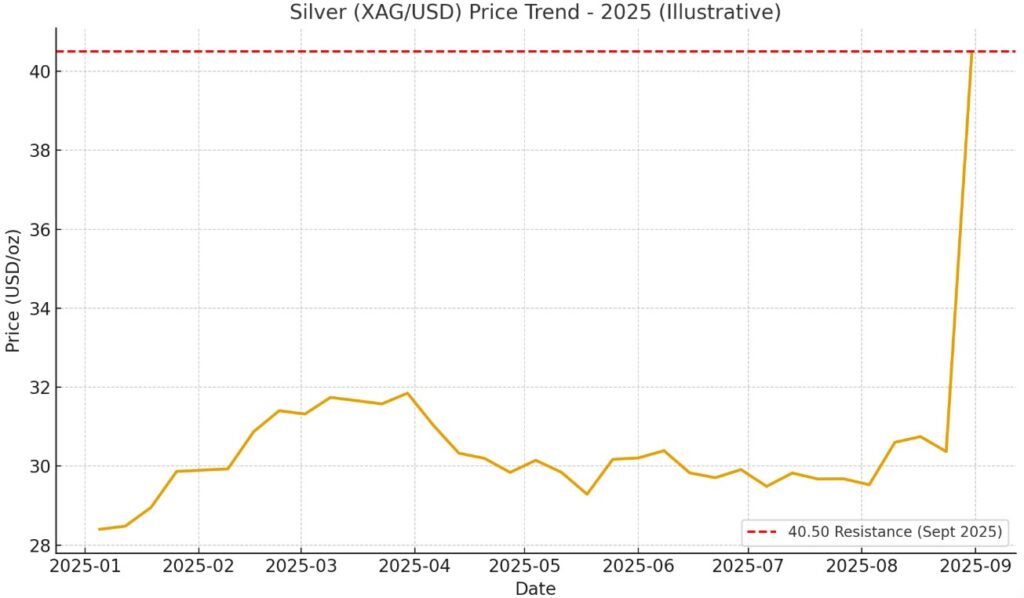
The silver market has entered one of the most explosive phases in modern history. As of December 1, 2025, silver has surged to approximately $57-58 per ounce, shattering its previous all-time high and igniting global interest from retail traders, institutions, and industrial buyers alike. This isn’t merely a speculative spike—it reflects deep structural changes in physical supply, futures positioning, and macroeconomic demand for hard assets across multiple global markets.
This comprehensive analysis covers:
- 📈 Why silver rallied to $58 and the technical breakout dynamics
- 🏦 What’s happening inside COMEX futures markets
- 🇨🇳 Shanghai silver market conditions and SHFE premium/discount dynamics
- 🇮🇳 India’s latest import policy changes and legal restrictions
- 🇬🇧 London (LBMA) physical tightness and unprecedented spot market stress
- 🔮 Price expectations for the months ahead in a $58+ environment
📈 Silver’s Historic Surge to $58: The Catalyst Behind the Move
Silver has risen approximately 91-97% year-to-date in 2025, dramatically outperforming most traditional asset classes. The metal broke through critical resistance levels that had capped prices since 2011, unleashing powerful momentum that has carried prices to new all-time highs.
Technical Breakout Above Decades-Long Resistance
Silver finally shattered the critical $30-$35 zone earlier this year—a level that had acted as a ceiling for over a decade. Once price cleared these barriers, momentum accelerated dramatically:
- Stop-loss orders were triggered across multiple timeframes
- Short covering intensified as bearish positions unwound
- Trend-following algorithms and CTAs added long positions
- Retail and institutional macro funds joined the rally
The result has been a vertical rally reaching $58/oz, with volume expanding sharply at each successive breakout level.
Massive Physical Demand Entering the Market
Physical silver demand has surged across multiple sectors:
- Industrial consumption: Solar panel manufacturing, electric vehicles, semiconductors, and electronics
- Investment demand: Physical bars, coins, and ETF inflows tripling compared to 2024
- Institutional buying: Large-scale purchases through OTC channels and EFP mechanisms
Industrial consumption alone is projected to hit record highs, with solar photovoltaic demand expected to double by 2030, fueling structural supply deficits.
🏦 Inside COMEX: Signs of Extreme Physical Tightness
Registered Silver Inventories Under Pressure
COMEX « registered » silver—metal available for futures delivery—has been declining steadily throughout 2025. This is a critical squeeze indicator because:
- Less registered silver means more delivery pressure on short positions
- Shorts face significantly higher risks when standing for delivery
- Physical demand shifts to OTC markets, pushing global spot prices higher
With prices now consistently above $50, concerns about physical scarcity have amplified the rally further.
EFP Activity Surging
Exchange for Physical (EFP) volumes have spiked dramatically in recent months. The EFP spread—normally around 25 cents per ounce—expanded to as much as $1.10 per ounce during peak tightness, indicating extraordinary stress in converting paper positions to physical metal.
This typically signals that:
- Futures shorts cannot or prefer not to deliver physical metal
- Buyers insist on actual metal rather than paper contracts
- Global liquidity channels are being severely stressed
Futures Spreads and Backwardation Threats
Multiple times throughout 2025, the front-month silver contract has approached backwardation—where spot prices exceed futures prices. This rare condition in silver markets signals immediate physical demand that outstrips near-term supply availability.
🇨🇳 Shanghai Silver Market & SHFE Premium/Discount Dynamics
The Shanghai silver market has become increasingly critical to understanding global silver dynamics, as China represents both a major consumer and an important trading hub for Asian physical flows.
SHFE Trading Characteristics
The Shanghai Futures Exchange (SHFE) silver futures contract, launched in May 2012, is:
- Denominated in RMB and physically delivered
- Contract size: 15 kg per lot
- Delivery unit: 30 kg minimum
Current Premium/Discount Structure
As prices surged to record levels, Shanghai’s physical silver market has displayed complex premium/discount dynamics:
- National standard silver ingots: Trading at premiums of 4-6 yuan/kg against the TD (deferred) contract
- Against SHFE futures: Showing discounts of 10-17 yuan/kg against the December 2025 contract
- Large-factory silver ingots: Commanding premiums of 5-7 yuan/kg against TD
Supply Tightness and Trading Activity
The Shanghai spot market has experienced significant stress during the rally:
- Suppliers holding back: Many refiners and distributors have adopted wait-and-see approaches, refusing to sell at current premiums in anticipation of higher prices
- Downstream buyers cautious: Industrial buyers have largely stepped back from purchases, leading to weaker transaction volumes
- Thin trading activity: Only suppliers with urgent capital needs are making transactions at modest premiums
Shanghai Gold Exchange (SGE) Inventory Trends
The SGE, which handles physical spot trading in China, has seen inventory pressures similar to global markets. The exchange’s warehouse stocks provide crucial insights into Chinese physical demand, which has been elevated throughout 2025 due to:
- Strong industrial fabrication demand
- Investment buying amid currency concerns
- Export manufacturing requirements for electronics and solar panels
Key takeaway: The Shanghai silver premium/discount to international markets has fluctuated significantly in 2025, reflecting China’s dual role as both a major consumer and a potential supplier to global markets. Chinese refining and export decisions remain decisive factors that could either alleviate or exacerbate global tightness.
🇮🇳 India’s Silver Import Policy Revolution: Legal Restrictions and Market Impact
India, traditionally one of the world’s largest silver consumers, has implemented dramatic policy changes in 2025 that have reshaped global silver flows and contributed to price volatility.
Import Duty Slashed from 15% to 6%
In a major policy shift announced in late October 2025, the Indian government dramatically reduced import duties on silver bullion from 15% to just 6%. This substantial cut was designed to:
- Combat smuggling and undeclared imports
- Lower input costs for domestic manufacturers
- Provide relief to legitimate traders
- Support the growing industrial silver sector
Jewelry Import Restrictions Until March 2026
However, on September 24, 2025, the Directorate General of Foreign Trade (DGFT) imposed significant restrictions on plain silver jewelry imports, effective until March 31, 2026. This move was prompted by:
- FTA loophole exploitation: Imports of unstudded silver jewelry from Thailand surged tenfold (from 4 tonnes to 40 tonnes) between April-June 2024 and April-June 2025
- Thailand’s share surge: Thailand’s portion of India’s silver imports jumped from 78% to 98%, despite Thailand not being a primary silver-producing nation
- Transshipment concerns: Raw silver bullion was being minimally worked and imported as « finished jewelry » to exploit zero-duty access under the ASEAN-India Trade in Goods Agreement (AITIGA)
Impact on Domestic Industry
The restrictions aim to protect India’s labor-intensive jewelry sector, which employs over 4.3 million people. Officials stated that unchecked imports were:
- Adversely affecting domestic manufacturers
- Threatening employment, particularly in small and medium enterprises
- Undercutting domestic prices during peak demand seasons
Import Surge Despite Restrictions
Even with jewelry restrictions in place, India’s overall silver imports remain robust:
- 2025 projection: Expected to reach 5,500-6,000 metric tons by year-end
- September surge: Imports nearly doubled from August levels
- August spending: Topped $451 million in silver imports
- January surge: Silver imports jumped 37% year-over-year to 875 tonnes—the highest since 2008
Festival and Investment Demand
India’s silver demand remains driven by multiple factors in a $58+ environment:
- Festival and wedding season: Traditional purchases during Diwali and regional celebrations
- ETF inflows tripling: Indian silver-backed ETF investments have surged as investors seek more affordable alternatives to gold
- Social media amplification: Online promotion of silver investment has expanded retail participation
- Price performance: Silver prices in India have risen nearly 49% in 2025, outpacing gold
Key takeaway: India’s policy changes reflect the government’s attempt to balance protecting domestic industry while facilitating legitimate bullion imports. The 6% duty makes raw silver more accessible, but jewelry restrictions have temporarily constrained some demand channels. Strong festival demand and investment flows continue to pull substantial volumes into India, contributing to global supply tightness.
🇬🇧 London (LBMA) Physical Tightness: Unprecedented Spot Market Stress
The London Bullion Market Association (LBMA), the world’s central hub for physical precious metals trading, has experienced what many analysts describe as the most severe physical silver shortage in decades.
Historic Inventory Drawdown
LBMA vault holdings have experienced dramatic declines throughout 2025:
- Q1 2025 decline: Inventories fell 14%, from 827.5 million oz to 711.4 million oz
- Year-over-year decline: Down approximately 15% from 2024 levels
- October surge: Vaults received the largest inflow in at least nine years—54 million troy ounces—drawn by historic arbitrage opportunities
- Current stress level: TD Securities estimated free-floating London inventories at approximately 135 million oz—roughly half of daily average trading volume
Lease Rates Reach Extreme Territory
Silver lease rates—the cost to borrow physical metal—have surged to unprecedented levels, signaling acute tightness:
- Peak levels: 1-month lease rates reached 19% and spiked as high as 35% during acute stress periods
- October spike: Lease rates hit 24-25% before moderating slightly
- Comparison: These rates exceeded platinum lease rates for the first time in decades
- Historical context: Normal lease rates typically range from 0.5-2%, making current levels extraordinary
As Bruce Ikemizu, former Tokyo precious metals banking director and current head of the Japan Bullion Market Association, declared: « Silver squeeze is on. This is serious. »
Backwardation and Forward Curve Inversion
The London forward silver market experienced rare backwardation—where spot prices exceed forward prices—indicating extreme near-term demand:
- Forward liquidity essentially « drained » from the LBMA market
- Market participants willing to pay premiums for immediate delivery
- EFP-linked short positions forced to cover in the spot market
Cross-Market Arbitrage Flows
The London tightness triggered unprecedented metal flows between global markets:
- COMEX to London transfers: Substantial quantities moved from New York warehouses to LBMA vaults
- Air freight surge: Specialized logistics companies reported record demand for rapid international silver transportation
- Premium structure: London spot prices commanded significant premiums over COMEX futures during peak stress
ETF Inflows Draining Free Float
Investment demand through ETFs has been a primary driver of London’s inventory decline:
- Absorption mechanism: ETF buying removes metal from the tradeable supply available to industrial users
- Holdings ratio: The ratio of available silver to ETF holdings reached approximately 1:1, meaning effectively no surplus free-floating silver
- Structural demand: Unlike speculative futures, ETF holdings represent physical metal removal from the market
Indian Demand Impact on London
TD Securities’ Daniel Ghali noted that strong buying activity in India was one catalyst behind London’s inventory drain, as Indian demand pulled metal out of LBMA vaults through the year.
System Architecture Under Stress
The London market’s structure—built on unallocated accounts and metal leasing—faces fundamental challenges at current stress levels:
- Fractional system: Multiple claims exist on the same physical bars through leasing and unallocated accounts
- Recall pressure: When metal is recalled by lenders, the entire system becomes less elastic
- Clearing capacity: Bullion banks have lifted margin requirements to protect themselves, reducing system liquidity
- Conversion delays: Converting « paper » exposure into « allocated » physical bars is capital-intensive and time-consuming
The « End Game » Scenario
TD Securities strategist Daniel Ghali described the situation as approaching what he calls « the end game » for the « #silversqueeze you can buy into »:
« For the first time in 1.5 years since the inception of the ‘#silversqueeze you can buy into’, we see a pressure release valve on the horizon. This is what a thematic climax looks like. »
Ghali estimated in earlier commentary that there were « probably less than four months » remaining until the LBMA’s entire free-floating stockpile could be depleted at the prevailing rate of ETF inflows.
Recent Pressure Relief
The October inflow of 54 million ounces provided temporary relief, but analysts note that:
- The metal was drawn by extreme arbitrage opportunities, not structural supply improvement
- Elevated lease rates persist, indicating ongoing tightness
- The system remains vulnerable to renewed stress if investment demand accelerates
Key takeaway: London’s physical silver market experienced what amounts to a « bank run » scenario in 2025, where the fractional reserve structure of the bullion banking system was tested by sustained physical demand. While October’s inflows provided breathing room, the structural fragility remains evident in elevated lease rates and reduced free-floating inventory.
📊 Technical Outlook for Silver at $58
Bullish Technical Factors
- Clean breakout into new all-time highs above the 2011 peak
- Strong trend structure with consistent higher highs and higher lows
- Expanding volume confirming buyer conviction at each level
- Momentum indicators remain positive on weekly and monthly timeframes
- Gold/Silver ratio at 74:1, near the low end of the recent range
Key Technical Levels to Watch
Resistance zones:
- $60 psychological level
- $65-$70 extension targets
Support zones:
- $52-$54 initial support
- $48-$50 stronger support cluster
Volatility Warning
At these elevated levels, silver tends to move violently due to:
- Profit-taking from earlier longs
- Algorithmic volatility amplification
- Macro sensitivity to USD and interest rate movements
- Leverage unwinding during sharp pullbacks
Silver can experience 10-15% retracements even within strong bull markets, so position sizing and risk management remain critical.
🔮 Silver Price Expectations in a $58+ Environment
⭐ Short-Term Outlook (December 2025 – Q1 2026)
Base case: Bullish with high volatility
Forecast models suggest:
- December 2025 close: $60-$67 range
- January-March 2026: Potential climb toward $70-$75
- Volatility: Expect 10-20% intraday swings
Key factors supporting upside:
- Physical supply still constrained across all major hubs
- ETF inflows likely to continue if dollar weakens
- Industrial demand remains structural and inelastic
- Short covering may not be complete
🚀 Medium-Term Outlook (2026-2027)
Strongly bullish – structural fundamentals remain powerful
Analyst projections cluster around these ranges:
- Conservative target: $70-$80
- Base case target: $80-$95
- Bull case target: $100-$120
Supporting factors:
- Industrial demand acceleration: Solar panel installations projected to double by 2030, requiring substantial silver increases
- Mine supply constraints: Silver production growth remains stagnant; most silver comes as a byproduct of base metal mining
- Monetary demand: High-inflation environment driving hard asset accumulation
- Market structure evolution: Growing preference for physical over paper exposure
- Supply deficits: Structural deficits projected to persist (demand ~35,700 tonnes vs. supply ~31,000 tonnes)
📉 Bear Case: What Could Reverse the Rally?
Potential negative catalysts include:
- Sharp USD rally: Stronger dollar increases opportunity cost of holding zero-yield silver
- Interest rate spike: Sudden rate increases could trigger speculative long liquidation
- Major profit-taking: Funds booking gains after 90%+ YTD returns
- Industrial slowdown: Global recession reducing fabrication demand
- China export policy shift: Increased Chinese refining capacity or loosened export restrictions
- Miner hedging: Producers locking in high prices through forward sales
In this scenario, silver could correct to the $35-$45 range before finding support.
Long-Term Forecast (2028-2030)
Multiple forecasting models project continued strength:
- 2028: $100-$110 range
- 2030: $120-$165+ range
This assumes continued green technology adoption, persistent supply deficits, and sustained investment demand in an era of currency debasement concerns.
🎯 Five Key Indicators to Monitor
For traders and investors navigating this volatile market, focus on these critical data points:
- COMEX registered inventories: Weekly updates reveal physical availability in the futures market
- LBMA lease rates: Spikes above 10% signal renewed tightness
- ETF flows: Large daily inflows (>5 million oz) indicate strong investment demand
- EFP spreads: Widening beyond $0.50 suggests physical delivery stress
- Shanghai premium/discount: Tracks whether Chinese demand is pulling or pushing metal into global markets
🧭 Conclusion: A Historic Inflection Point
Silver’s rally to $58/oz represents far more than a cyclical price move—it marks a fundamental shift in the global silver market structure.
The convergence of factors is unprecedented:
- ✅ COMEX futures market showing declining registered inventory and elevated EFP activity
- ✅ Shanghai market displaying supply reluctance and premium volatility
- ✅ India implementing policy changes that both restrict jewelry imports and slash bullion duties, creating complex flow dynamics
- ✅ London LBMA experiencing the most severe physical shortage since 1980, with lease rates at extreme levels
- ✅ Industrial demand from solar and EVs creating structural, inelastic consumption growth
- ✅ Investment demand surging as monetary uncertainty drives capital toward tangible assets
The next major catalysts will likely emerge from:
- COMEX and LBMA inventory trends
- Lease rate behavior in London
- China’s refining and export policy decisions
- India’s post-restriction demand patterns
- Federal Reserve policy shifts and USD direction
If silver cleanly breaks and holds above $60, the market could enter a new acceleration phase—one where traditional technical targets of $70, $80, or even $100+ come into play within 12-24 months.
The silver market is no longer quiet. It is loud, volatile, and presenting both significant opportunities and substantial risks for participants across the spectrum—from industrial hedgers to momentum traders to long-term investors seeking hard asset exposure in an uncertain monetary environment.
How to track Silver market and next moves ?
🧨 1. Registered Silver Starts Dropping Fast
COMEX vaults contain:
-
Eligible metal (customer-owned, NOT for delivery)
-
Registered metal (available for futures delivery)
A squeeze only happens when registered metal falls sharply.
✔️ Bullish squeeze signal:
-
Registered silver under 30 million oz
-
Daily withdrawals accelerating
-
Eligible being converted to registered slows down or stops
-
Sudden decline in warehouse stock reports
This means the metal needed to settle futures contracts is disappearing.
🧨 2. Delivery Notices Spike Above Normal
Silver delivery months (Dec & Jul) often see heavy delivery.
But in a squeeze the numbers are extreme.
✔️ Bullish squeeze signal:
-
Delivery demands exceed 70% of registered inventory
-
Delivery notices increase suddenly mid-cycle
-
Standing-for-delivery % rises above normal
This forces shorts to scramble for metal.
🧨 3. EFP (Exchange for Physical) Explodes
A huge EFP surge means futures shorts cannot deliver and try to settle off-exchange.
If EFP volume becomes extremely high, it means:
-
Shorts are trying to find physical metal anywhere they can
-
Arbitrage channels are stressed
✔️ Bullish squeeze signal:
-
EFP spikes to 2,000+ per day
-
Consecutive day streak of elevated EFP
-
Clearport activity rising sharply
Your report already shows 670 → this is high, but not squeeze-level yet.
🧨 4. Backwardation Appears
Silver almost always trades in contango (future months > spot).
But when physical is scarce, the front month flips above spot.
✔️ Bullish squeeze signal:
-
Spot > front-month futures
-
Cash-premium trades appear
-
Tight spreads between Dec ↔ next month
Backwardation in silver is a major red flag of supply stress.
🧨 5. Massive Open Interest Drain With Rising Price
OI falling while price falls = bearish
OI falling while price rises = squeeze
It means:
-
Shorts are covering
-
Longs are standing for delivery
-
Paper supply is shrinking
This is one of the most reliable indicators.
Your data already shows a massive OI drop, so this is worth monitoring.
🧨 6. Vault Reclassification Stops
Normally when COMEX registered bars get depleted, vaults convert “Eligible” metal into “Registered” to stabilize the system.
A squeeze begins when:
-
Eligible → Registered conversions drop to nearly zero
-
Registered = steady decline
-
Banks stop replenishing
This means the real physical supply is tight.
🧨 7. High Premiums in Retail and Wholesale Silver Markets
A true squeeze hits all levels of the supply chain.
✔️ Squeeze-level premiums:
-
100 oz bars → +5% to +10% premium
-
1,000 oz wholesale → +2% to +4% premium
-
Coins → +20%–50% premium
When wholesale bar premiums rise, COMEX is in trouble.
🧨 8. Sudden Increase in Exchange-For-Physical Failures
Not always public, but it shows up as:
-
Irregularity in volume
-
Delayed clearing
-
“Swap” transactions increasing
-
Large spreads between London spot and COMEX
When banks struggle to source silver in London for EFPs → squeeze.
🧨 9. CME Issues Delivery Warnings or Adjusted Rules
In past squeezes (1979 Hunt Brothers, 2011 mini-squeeze), CME:
-
Raises margins
-
Changes position limits
-
Modifies delivery rules
-
Introduces special notices
Any emergency rule change is a huge signal.
🧨 10. Spot Silver Price Decouples From Paper Futures
The final confirmation of a real squeeze is:
✔️ Spot (physical) price rising faster than futures price
This means:
-
Physical buyers are bidding aggressively
-
Paper shorts cannot source metal
-
London OTC market is stressed
This is the “no turning back” moment.
🧨 THE TOP 3 MOST RELIABLE SQUEEZE CONFIRMATION SIGNALS
If you only watch a few things, watch these:
1. Registered silver drops below 30M oz
2. Front-month backwardation
3. Rising price + collapsing open interest
Those three together = confirmed COMEX stress event.
Wants more ? Lets talk about Commodities Scarcity-Driven markets !
🌍 The Commodities Era: Silver as the Vanguard of a Broader Scarcity-Driven Rally
Silver’s explosive rally to $58 is not happening in isolation—it signals the beginning of what many analysts are calling a new « Commodities Era » driven by structural scarcity across critical materials. The same forces propelling silver higher are creating powerful tailwinds for multiple precious and industrial metals that face similar supply-demand imbalances.
Precious Metals Complex: The Debasement Trade Broadens
Gold has already broken above $4,000 per ounce, establishing new record highs as central banks continue aggressive accumulation and investors seek hard asset protection against currency debasement. Platinum recently hit 12-year highs near $1,650/oz, supported by supply deficits in automotive catalysts and growing hydrogen economy applications. India has extended import restrictions to platinum jewelry (until April 2026), mirroring the silver policy approach and signaling government concerns about precious metal flows. Palladium, while more volatile, remains structurally tight due to limited mine supply concentrated in Russia and South Africa, with industrial demand from gasoline vehicle catalytic converters still robust despite EV transitions.
Industrial Metals: The Green Transition Bottleneck
The same green technology revolution driving silver demand is creating acute shortages across the industrial metals complex. Copper recently touched record highs above $5 per pound on CME futures, driven by electrification demands—electric vehicles require 3-4 times more copper than conventional vehicles, while grid infrastructure upgrades and data center expansion are consuming unprecedented volumes. Nickel faces structural deficits as battery-grade material requirements surge for EV production, with Indonesia’s export policies adding volatility to global supply chains. Lithium, while currently in a correction phase, remains critical for battery production with long-term demand projections far exceeding current supply capacity.
Rare Earth Elements: Geopolitical Scarcity Premium
Perhaps nowhere is scarcity more evident than in rare earth elements (REEs), where China controls 60-70% of global refining capacity. Recent Chinese export restrictions have sent shockwaves through global supply chains, as REEs are irreplaceable in wind turbines, EV motors, defense systems, and advanced electronics. Neodymium and praseodymium (NdPr), essential for permanent magnets in electric motors, face particularly acute shortages. Dysprosium and terbium, critical for high-performance magnets, are experiencing premium escalations as Western nations scramble to develop non-Chinese supply sources. Companies like USA Rare Earth and MP Materials are racing to build processing capacity outside China, but meaningful production remains years away.
Minor Metals: The Hidden Supply Crisis
Cobalt, concentrated in the Democratic Republic of Congo, faces ethical sourcing pressures alongside surging battery demand. Gallium and germanium, both subject to Chinese export controls implemented in 2023-2024, are critical for semiconductors and solar panels with no readily available substitutes. Tellurium, essential for advanced solar panels (CdTe thin-film technology), comes primarily as a byproduct of copper refining, creating supply rigidity even as solar deployment accelerates. Indium, used in LCD screens and touch panels, faces similar byproduct supply constraints.
Why This Cycle Is Different
Unlike previous commodity supercycles driven primarily by speculation or single-country demand surges, the current era reflects structural, irreversible transitions across the global economy:
- Energy transition mandates: Government policies worldwide are legally requiring green technology adoption, creating inelastic demand regardless of price
- Supply rigidity: New mine development typically requires 7-15 years from discovery to production, meaning supply cannot respond quickly to price signals
- Geopolitical fragmentation: US-China tensions and « friendshoring » initiatives are fragmenting previously globalized supply chains, reducing efficiency and increasing costs
- ESG constraints: Environmental and social governance requirements are making it harder and more expensive to develop new mining projects in developed nations
- Grade depletion: Existing mines are extracting progressively lower-grade ores, reducing output efficiency even as prices rise
- Monetary debasement: Record government debt levels and persistent inflation are driving capital toward tangible assets with intrinsic value
Investment Implications
The broad-based scarcity across metals suggests portfolio diversification opportunities beyond silver alone. Investors are increasingly allocating to:
- Physical metals and ETFs: Direct exposure to gold, silver, platinum, and palladium through bars, coins, or physically-backed funds
- Mining equities: Producers and developers of critical materials offering leveraged exposure to price appreciation
- Royalty and streaming companies: Lower-risk exposure through companies that finance mining operations in exchange for production shares
- Critical materials funds: Specialized vehicles focused on battery metals, rare earths, and technology materials
- Commodity futures: Direct exposure through futures contracts for sophisticated investors
As Bank of America noted in recent research: « We’re witnessing the most significant structural shift in commodities markets since the post-war industrialization period. The difference is that this cycle is driven by mandated transitions with no viable alternatives, creating a recipe for sustained scarcity premiums. »
Bottom line: Silver’s rally to $58 is a leading indicator of broader commodity market stress. Investors watching silver should simultaneously monitor the entire complex of metals essential to modern technology and the energy transition—because the same scarcity dynamics are building across the board, potentially creating a multi-year commodities supercycle.